All issues

Issue guide · Reviewed

Energy / Climate

The U.S. needs enough power to keep homes and businesses running while limiting pollution and preparing for climate risks. The choices include what to build, how quickly to connect it, and who pays for the changes.

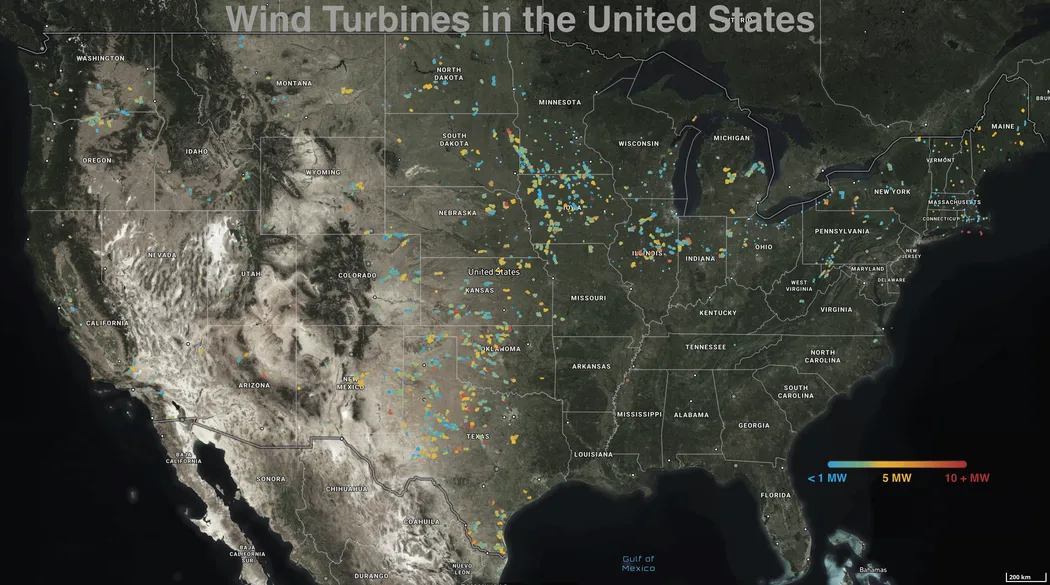
A U.S. map shows wind turbines clustered across the Great Plains, Midwest, and Texas, with dots colored by their generating capacity.
U.S. wind turbines · U.S. Geological Survey map, 2024

Energy and climate by the numbers

U.S. figures unless marked global. Each measure has its own reporting period.

Residential electricity price
18.16¢Per kWh · Aug 2026, preliminary
EIA electricity prices
Regular gasoline
$3.995Per gallon · Week of Nov 9, 2026
EIA weekly prices
Utility-scale generation
4,425 TWhU.S. net electricity output · 2025
EIA Electric Power Annual
Renewable electricity
24.0%Share of utility-scale output · 2025
EIA generation data
Energy-related CO₂
4.90BMetric tons · 2025
EIA emissions
Global surface temperature
+1.43°CVersus 20th-century October average · Oct 2026
NOAA climate report

How the power mix changed

Coal supplied a third of U.S. utility-scale electricity in 2015. By 2025 its share had halved, natural gas led, and renewables supplied almost a quarter.

  • Natural gas
  • Coal
  • Nuclear
  • Renewables
Share of United States utility-scale electricity generation, 2015, 2020, and 2025 Coal’s share fell from 33.2% to 16.6%. Natural gas rose from 32.7% to 40.9%, renewables rose from 13.3% to 24.0%, and nuclear declined from 19.5% to 17.7%. 2015 Natural gas, 32.7% 2020 Natural gas, 40.6% 2025 Natural gas, 40.9% 2015 Coal, 33.2% 2020 Coal, 19.3% 2025 Coal, 16.6% 2015 Nuclear, 19.5% 2020 Nuclear, 19.7% 2025 Nuclear, 17.7% 2015 Renewables, 13.3% 2020 Renewables, 19.5% 2025 Renewables, 24.0%
View generation shares
YearGasCoalNuclearRenew.Other
201532.7%33.2%19.5%13.3%1.2%
202040.6%19.3%19.7%19.5%0.9%
202540.9%16.6%17.7%24.0%0.7%
Renewables include conventional hydro, utility-scale solar, wind, and other renewables. Small-scale solar is excluded. The table includes other sources and net pumped storage. Shares are rounded. EIA Electric Power Annual
Compare household electricity prices by region

Selected Census divisions, August 2026. EIA preliminary averages in cents per kilowatt-hour. Bills also depend on usage and the local rate structure. EIA regional table

New England
28.31¢
Pacific, contiguous
25.59¢
Mountain
14.86¢
U.S. average
18.16¢

What needs solving

Energy bills vary widely

In August 2026, residential electricity averaged 28.31¢ per kWh in New England and 18.16¢ nationally. Fuel prices, utility investments, and how costs are spread across customers all affect bills.

EIA electricity prices

New demand can outrun the grid

Data centers and other large customers can add demand before utilities finish new lines or power plants. Regulators are examining how to connect them while protecting reliability and existing customers.

FERC large-load proceedings

Warming raises risks from extremes

Extreme heat, heavier rainfall in many regions, and other climate-driven hazards expose homes, infrastructure, and public health. Cutting emissions limits future warming. Adaptation reduces harm from risks already present.

Fifth National Climate Assessment

The policy debate

Each approach has implications for bills, reliability, emissions, and the communities where projects are built.

Which power sources should policy favor?

What changes. Credits can encourage wind, solar, and other low-emission power. Other approaches ease licensing for nuclear projects or keep gas and existing plants available during high demand.

Tradeoffs. Wind and solar use no fuel but their output varies with the weather. Storage, transmission, and power that can run on demand help cover gaps. Gas has ongoing fuel and emissions costs. Nuclear provides steady low-carbon power and can take years to finance and build.

How fast should projects move, and who pays for the grid?

What changes. Permitting bills propose deadlines and changes to environmental review. Grid measures would upgrade existing lines or change how utilities connect new projects and decide who pays.

Tradeoffs. Faster approvals can cut delays. Siting rules also affect landowners, Tribal consultation, and conservation. Large users can fund dedicated upgrades, while regional investments can benefit a wider group of customers.

Set federal emissions standards or rely more on state policy and incentives?

What changes. Federal standards set common limits for covered sources. States can use tools such as power-sector targets or carbon markets, while federal tax incentives can lower the cost of cleaner equipment.

Tradeoffs. Common standards can drive reductions across state lines and impose compliance costs. State choices can fit local conditions, with different requirements and outcomes across the country. Incentives shift some of the cost to taxpayers.

Federal legislation and rules

Selected measures with national reach. Dates identify legislative action, enactment, or agency publication.

Pending federal legislation 3 tracked

Senate substitute offered Nov 10 · Cloture vote scheduled Nov 16, 2026

Bipartisan American Affordability and Jobs Act · S.Amdt. 6883 to H.R. 2347

The substitute would change federal environmental review and permit timelines, revise electricity transmission planning, and address generation projects waiting to connect to the grid. It uses a House-passed tax bill as the legislative vehicle.

Congressional Record, amendment text · Senate floor schedule

Passed House Sep 15 · Referred in Senate Sep 16, 2026

High-Capacity Grid Act · H.R. 6633

Would direct FERC to designate high-performing transmission conductors and require their use in covered interstate projects, with exceptions. Upgrading wires can move more power along an existing route.

Text and Senate referral

Passed Senate Sep 30 · Held at House desk Oct 5, 2026

MORE American Fuel Act · S. 5249

Would align NRC licensing for uranium enrichment with licensing for other fuel-cycle facilities. The bill changes regulatory treatment for a part of the domestic nuclear fuel supply chain.

Senate-passed text · Bill status
Recently enacted and foundational laws 3 tracked

Enacted · Sep 25, 2026

Hydropower Licensing Transparency Act · P.L. 119-112

Requires FERC to report annually to Congress on pending hydropower relicensing applications. The reporting gives lawmakers a regular way to see where reviews stand.

Public law

Enacted · Jul 4, 2025 · Wind and solar construction threshold Jul 4, 2026

Clean electricity tax credits · P.L. 119-21

Wind and solar projects that begin construction after July 4, 2026 generally lose eligibility for the clean electricity production and investment credits if they are placed in service after Dec 31, 2027. IRS guidance explains how to establish the start of construction.

Public law, §§ 70512–70513 · IRS guidance

Enacted Jul 9, 2024 · Implementation underway

ADVANCE Act · P.L. 118-67

Directs NRC to improve advanced-reactor licensing and review timelines and supports its workforce. The agency is carrying out the law through multiple licensing and regulatory initiatives.

Public law · NRC implementation
Federal rules and implementation 4 tracked

Partial repeal published Sep 17 · Effective Nov 16, 2026

EPA rolls back several power-plant CO₂ standards

The final rule repeals emissions guidelines for existing fossil-fuel steam units and carbon-capture-based standards for some coal modifications and new baseload gas turbines. A separate proposal would remove all remaining greenhouse gas requirements for fossil-fuel plants.

Final rule · Broader proposal

Final rule published · Feb 18, 2026

EPA rescinds the vehicle greenhouse gas finding and standards

The rule rescinds EPA’s 2009 finding under the vehicle provision of the Clean Air Act and repeals greenhouse gas standards for motor vehicles and engines. Petitions for review are pending.

Federal Register · Pending challenge

Proposed · Oct 27, 2026

EPA proposes revisions to oil and gas methane rules

The proposal revisits requirements for new and existing oil and gas sources, including leak-monitoring and equipment provisions. The rulemaking remains open.

Proposed rule text

Show-cause proceedings · Responses due Nov 16 and Nov 20, 2026

FERC reviews how grids connect large customers

Regional grid operators must address whether their tariffs fairly assign costs and protect reliability when data centers and other large customers connect. FERC is gathering responses before deciding whether tariff changes are needed.

FERC dockets and deadlines

Federal courts

Selected decisions and pending cases with national implications. Status checked Nov 14, 2026.

Recent decisions 2 tracked

Order vacated Sep 11, 2026 · Rehearing sought Oct 26 · D.C. Circuit

Michigan v. U.S. Department of Energy · No. 25-1159

The court vacated an emergency order keeping Michigan’s J.H. Campbell coal plant available to run. It held that DOE had not shown an electricity shortage risk serious and immediate enough to justify the particular order.

Why it matters. The opinion limits how DOE can use federal emergency authority to keep plants open. It addressed one order, and DOE issued a later order for the plant.

D.C. Circuit opinion · Rehearing filing summary

Stay denied · Oct 5, 2026 · D.C. Circuit

American Public Health Association v. EPA · No. 26-1037 and consolidated cases

The court denied a request to pause EPA’s rescission of the endangerment finding and vehicle greenhouse gas standards. The rule remained in place while the challenge proceeded.

Why it matters. The order left the nationwide vehicle regulation change in effect during litigation.

Court order and case filings · Pending merits review
Pending cases 2 tracked

Petitions for review pending · D.C. Circuit

Challenge to EPA’s vehicle greenhouse gas repeal · No. 26-1037 and consolidated cases

States, public health and environmental groups, and other petitioners challenge the rule under the Clean Air Act and administrative law.

Why it matters. The outcome will affect whether the repeal of federal greenhouse gas standards for cars and trucks stands.

Petitions, orders, and case summary · EPA final rule

Argued Oct 5, 2026 · Awaiting decision · U.S. Supreme Court

Suncor Energy v. Commissioners of Boulder County · No. 25-170

The Court is considering whether federal law precludes Boulder’s state-law climate claims against energy companies, and whether it has jurisdiction to decide the appeal.

Why it matters. A ruling on preemption could affect whether similar state-law climate damages suits can proceed elsewhere.

Supreme Court docket · Questions presented

Who’s involved

Agencies and advocacy groups

Federal Energy Regulatory Commission
Oversees interstate transmission and wholesale electricity markets and licenses many hydropower projects.
Environmental Protection Agency
Implements federal pollution laws, including Clean Air Act rules for vehicles and power plants.
Edison Electric Institute
Represents investor-owned electric companies in debates on grid investment and regulation.
Natural Resources Defense Council
Advocates and litigates on clean energy, public health, and emissions.

What to watch

· Scheduled Senate vote

Permitting and grid amendment

The Senate is scheduled to vote on ending debate on the Capito substitute.

Bill and floor schedule

and · FERC deadlines

Grid connections for large users

Five grid operators’ responses are due Nov 16. Southwest Power Pool’s response is due Nov 20.

FERC proceedings

· Scheduled close

UN climate conference

COP31 in Antalya is scheduled to conclude. Watch for any published agreement on climate policy and implementation.

UNFCCC schedule

· Scheduled data release

Electric Power Monthly

EIA’s next release updates measures including electricity generation and customer prices.

EIA release schedule

How to tell if it’s working. Track household bills, the time it takes projects to connect, outages during high demand, and emissions by sector.

From the 2028 field

Compare these records →