A close ally whose trade, technology, and security ties reach far beyond the Atlantic.
The U.S.–UK relationship joins a NATO alliance to major services, investment, research, and cultural links. Close cooperation does not settle every disagreement: trade implementation, technology rules, and the division of defense responsibilities remain practical tests of the partnership.
Universities, creative industries, travel, and families sustain connections beyond government agreements.
Economic ties
Trade figures are dated estimates, not a live counter. All amounts are U.S. dollars.
$370.6bnTwo-way goods and services trade · 2025
USTR estimates two-way goods and services trade at $370.6bn in 2025. Services account for $208.4bn of that total, so a goods-only picture misses more than half of the exchange. The directional bars isolate goods and use one scale.
Goods moving in both directions2025 · U.S. dollars · m = million, bn = billion · Same scale, starting at zero
United StatesUnited Kingdom
U.S. exports to United Kingdom$97.4bn
U.S. imports from United Kingdom$64.8bn
Goods only in these bars; services are included in the larger total alongside them. A trade balance alone does not measure the value of a relationship.
View the trade data
U.S.–United Kingdom trade · 2025 estimates · U.S. dollars; m = million, bn = billion
Measure
Amount
U.S. goods exports
$97.4bn
U.S. goods imports
$64.8bn
Goods and services, both directions
$370.6bn
Country developments · Reviewed
Reading the trade relationship
USTR’s 2025 estimates separate $162.2bn in goods from $208.4bn in services. The May 2025 Economic Prosperity Deal is a framework addressing selected barriers, not a comprehensive free-trade agreement. Tariff treatment depends on the product, legal authority, and implementation date; the original announcement is not a current tariff schedule.
NATO collective defenseU.S. and UK: founding allies since 1949
United Kingdom
Both participate in alliance decisions alongside the other NATO allies. Bilateral cooperation runs through additional channels.NATO coordination is distinct from either country’s national chain of command.
Cooperation through several channels
Both countries helped found NATO in 1949. Collective defense sits alongside bilateral military and intelligence cooperation. The UK Parliament’s April 2026 review highlights a more transactional U.S. approach and the need to strengthen European responsibility for security.
An alliance creates commitments and forums for coordination; it does not mean the two governments always choose the same policy or commit forces automatically.
Academic, research, cultural, and business exchanges are part of the wider partnership. Northern Ireland also gives U.S. diplomacy a particular historical role: American mediation and political support helped the negotiations that produced the 1998 Belfast (Good Friday) Agreement.
The peace settlement rests on its parties, institutions, and consent. U.S. support should not be confused with being a legal guarantor of the agreement.
Diplomacy, cooperation, disagreements, and decisions to watch in this relationship.
Country developments · Reviewed
IssueWhy it mattersWhat to watch
From trade framework to sector rulesWhy it mattersThe Economic Prosperity Deal addresses selected trade barriers. The pharmaceutical arrangement published April 2, 2026 links medicines pricing and access to trade commitments. Those measures have different effects for producers, patients, and public budgets.What to watchTrack published implementation and customs notices, medicine access, and investment outcomes. Check the operative product rules before treating an announced concession as available.
Technology promises into deliveryWhy it mattersThe September 2025 Technology Prosperity Deal memorandum sets out intended work on AI, quantum research, and civil nuclear energy. It ties operation to progress on the economic deal; a February 2026 parliamentary answer remained general about negotiations.What to watchLook for funded projects, regulatory decisions, research access, and announced implementation milestones. A signed memorandum or investment pledge alone does not show completion.
Sharing the security burdenWhy it mattersNATO cooperation links the relationship to European security. Parliament’s April 2026 review argues for stronger European capability as U.S. priorities and expectations change.What to watchAssess usable capabilities, procurement and readiness, and coordinated decisions. Spending commitments and diplomatic alignment do not by themselves establish operational results.
The Economic Prosperity Deal and subsequent sector arrangements provide a framework for managing selected trade issues rather than a comprehensive free-trade agreement.
Selected U.S. leads, reviewed November 17, 2026. Confirmation, taking the oath, and presenting credentials are separate events; each verified date is labeled below.
Who handles the relationship for the U.S.?
Key U.S. interlocutors: the officials leading diplomacy, trade, and security coordination. These are selected federal leads, not an exhaustive directory.
Embassy leadership
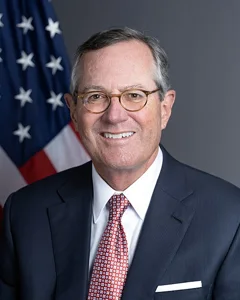
Warren Stephens
U.S. Ambassador to the United Kingdom
Senate confirmed
Credentials presented
Leads the U.S. embassy in London and the bilateral diplomatic channel. Coordinates the mission’s work with UK institutions; consular and specialist agencies retain their own responsibilities.
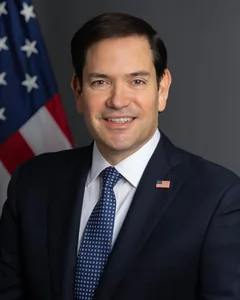
Leads State Department diplomacy, including senior political coordination with the UK and wider European partners. The secretary’s remit spans the bilateral relationship and international crises.
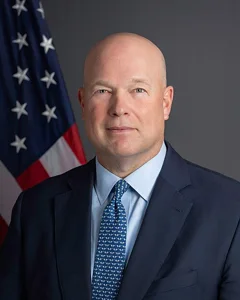
Leads U.S. trade negotiations and implementation discussions, including the Economic Prosperity Deal. USTR’s role is distinct from customs administration and domestic health regulation.
Represents the U.S. in NATO’s political decision-making, where the UK is a fellow ally. Handles alliance diplomacy rather than commanding British forces or replacing the ambassador in London.
The date shown records Senate confirmation. This NATO post serves the alliance as a whole; it is separate from the bilateral embassy in London.
Senate confirmation authorizes an appointment; it is not a swearing-in date. Swearing in marks the oath of office. An ambassador's presentation of credentials is a separate step with the receiving government. Each date above is labeled for the event the source verifies. The officials and roles were reviewed on Nov 17, 2026 and may change.